
When a property experiences hail, wind, fire, or water damage, determining whether HVAC equipment can be safely and
economically repaired is critical. Our reports are designed to give contractors, insurance professionals, and law firms
a clear, defensible evaluation of HVAC repairability based on observed damage, equipment condition, and industry standards.
We provide objective assessments for packaged units, air conditioners, and furnaces, with detailed documentation and
clear conclusions you can rely on.
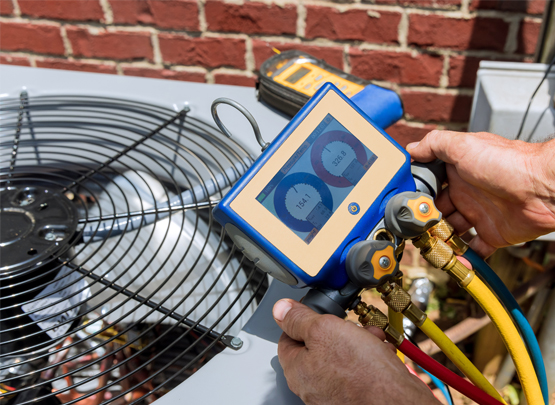
Hail impacts can:
Damage condenser coil fins, restricting airflow
Reduce heat transfer efficiency
Increase operating pressures and energy consumption
Shorten compressor life due to added strain
Lead to premature system failure
Even when a unit continues to run after a storm, reduced efficiency and hidden internal stress often mean the system is no longer performing as designed.
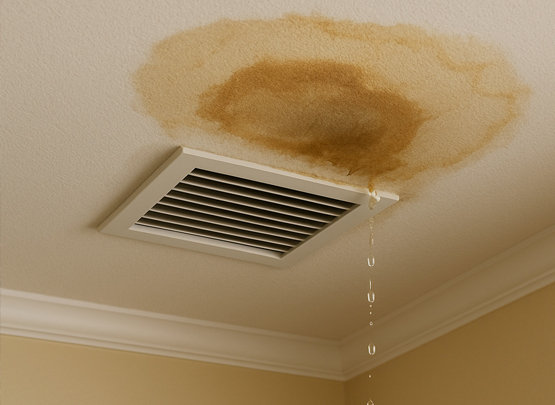
In some cases, the question is not whether a unit can be repaired, but whether it should be repaired.
HVAC systems have a finite lifespan. When a unit is significantly aged, repairing storm damage may not be practical
or cost-effective. This is similar to owning a 20-year-old vehicle with 200,000 miles—while repairs may keep it running
temporarily, investing heavily in equipment that is already at the end of its service life often does not make financial sense.
Our reports consider:
Equipment age and expected service life
Availability of replacement parts
Cost of repair versus replacement
Overall condition prior to the loss
Furnaces are most commonly affected by water and fire losses, each of which presents serious safety and reliability concerns.
Water exposure can:
Damage or corrode electrical controls and safety circuits
Cause rusting of metal components, including burners and heat exchangers
Compromise system reliability and safe operation
Lead to long-term failures even after drying
We don’t just replace parts—we evaluate the entire system to make sure repairs make sense and that the equipment can operate safely after service.
Fire-related losses can:
Damage wiring, control boards, and ignition systems
Weaken or degrade insulation on electrical components
Allow ash and soot to contaminate sensitive parts
Create hidden failures that may not be immediately visible
Ash intrusion is particularly harmful, as it can interfere with electrical connections, motors, and moving components, leading to unpredictable operation.
Our HVAC reports clearly state whether equipment is:
Repairable
Not economically repairable
Unsafe to return to service
Each report is supported by documented findings, photographs, and industry-accepted reasoning to help contractors, adjusters, and legal teams make informed decisions with confidence.
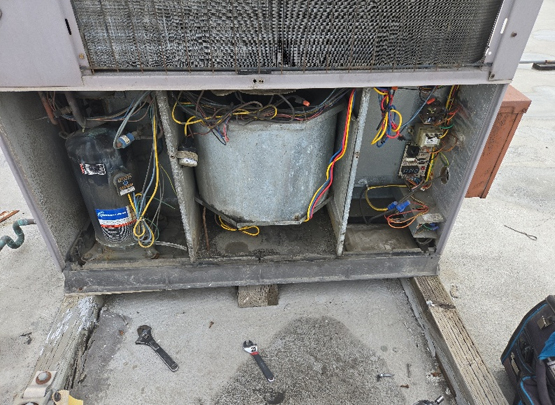
We are one of only a few HVAC contractors that focus on work in the insurance industry.
Preparing your comfort . . .